Pedestrian vs. Bicycle Accidents

Right-of-way issues in bike lanes and shared paths can complicate claims.

Pedestrian and bicycle accidents often occur on sidewalks, bike lanes, or shared pathways where right-of-way confusion is common. These accidents can result in serious injuries for pedestrians.
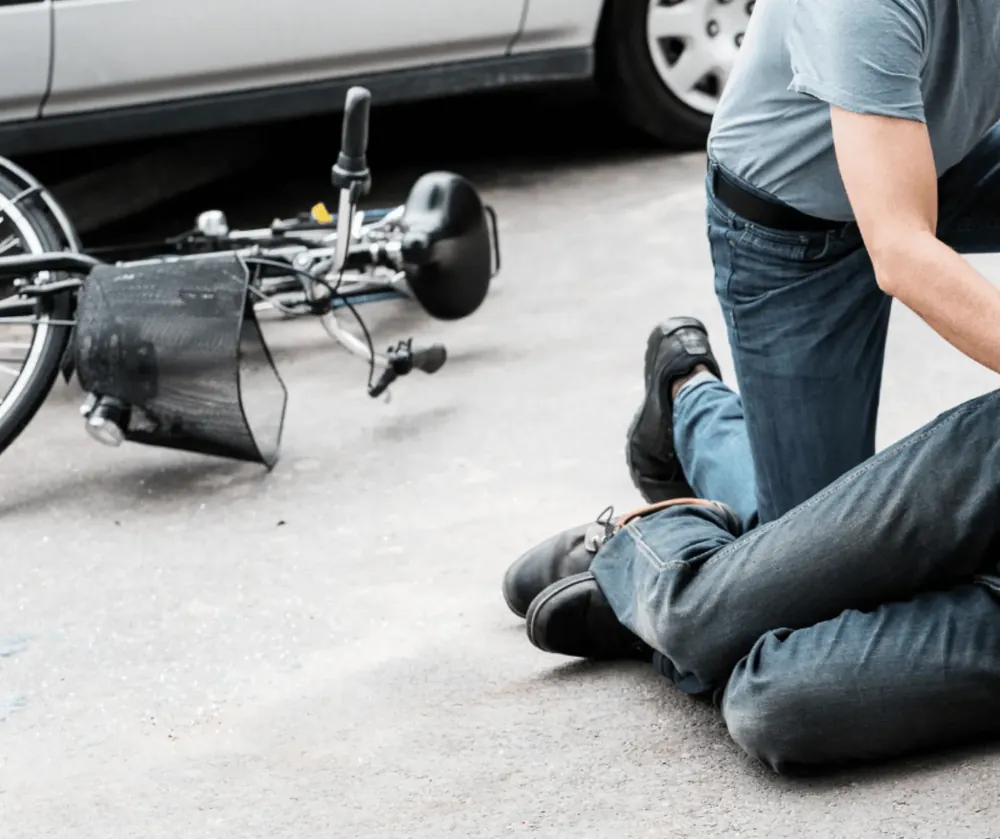
Cyclist near a shared path.
Shared pathways can create right-of-way conflicts.

Understanding Pedestrian vs. Bicycle Accidents

These accidents typically happen when cyclists travel at high speeds, fail to yield, or ride in restricted pedestrian areas. Pedestrians may suffer fractures, head injuries, or soft tissue damage upon impact. Liability depends on local traffic laws, cyclist behavior, and pedestrian actions. Unlike car accidents, insurance coverage may be limited, making compensation more complex. In some cases, homeowners or renters insurance may apply. A thorough investigation helps determine fault and identify all available sources of compensation.

Shared Paths, Crossing Points, and the Data on Pedestrian Risk

Most pedestrian deaths in 2024 — 79.5% of them, per our analysis of federal crash data — occurred at locations with no crosswalk or marked crossing. Pedestrian-bicycle conflicts often happen at the same kinds of uncontrolled locations: shared paths, driveways, and informal crossing points where neither the cyclist nor the pedestrian has a clearly marked right-of-way. The absence of infrastructure shapes both the crash and the claim. (Cash4Crashes analysis of NHTSA FARS 2024. Full study: There Was No Crosswalk.)

Because bicycle-vs-pedestrian crashes rarely involve auto insurance, identifying whether the cyclist had homeowner's or renter's liability coverage — and acting before those policy periods close — is an important early step.

Were you rear-ended by another driver?

Find out how much compensation you may be entitled to.

Frequently Asked Questions

Yes, a cyclist can be held legally responsible for a crash with a pedestrian, since cyclists are generally required to follow the same traffic laws as motor vehicles on the road, plus additional rules on shared paths and sidewalks that require yielding to pedestrians. If a cyclist runs a stop sign, fails to yield, or rides recklessly on a sidewalk or crosswalk, they can be found negligent just as a driver would be. Liability may fall on the cyclist's personal insurance, such as homeowner's or renter's coverage, since bicycles typically aren't covered by auto policies.

In most areas, yes, cyclists are required to yield to pedestrians, particularly on sidewalks, in crosswalks, and on shared multi-use paths, since pedestrians generally have priority in those spaces. Rules vary by state and municipality, and some areas restrict or prohibit sidewalk riding altogether. On standard roadways, cyclists and pedestrians interact less directly, but a cyclist turning across a crosswalk or riding through a marked pedestrian crossing is typically still expected to yield, and failing to do so can support a negligence claim if a collision results.

Insurance involvement in a pedestrian-bicycle accident depends on what coverage the cyclist carries, since bicycles are not typically insured under auto policies. A cyclist's homeowner's or renter's insurance may provide personal liability coverage that extends to accidents they cause off their property, including on a bike. If the cyclist has no applicable coverage, the pedestrian may need to pursue a claim directly against the cyclist personally, or rely on their own health insurance and, in some cases, personal injury protection or medical payments coverage from their own auto policy.

Yes, you should seek medical care after a pedestrian-bicycle accident even for injuries that seem minor, since impacts with a bicycle can cause soft-tissue damage, joint injuries, or head trauma that aren't immediately obvious. Symptoms like pain, swelling, or concussion signs can develop over the following days. Prompt medical evaluation both protects your health and creates a documented link between the accident and your injuries, which matters if you later need to pursue a claim against the cyclist's liability coverage or your own insurance.

Get the Compensation You Deserve

Our experienced rear-end collision attorneys are ready to fight for you. No fee unless you win.

Call Now Free Review